At Readheights Technologies, we've built and deployed nine AI-powered Android applications spanning categories from productivity to lifestyle. Here's the story of how we went from concept to Play Store success, and the lessons we learned along the way.
The Beginning: Why AI-Powered Apps?
In 2024, we saw a unique opportunity at the intersection of mobile development and Generative AI. While many companies were building web-based AI tools, we believed that mobile users deserved native, offline-capable AI experiences that felt seamless and personal.
Our hypothesis was simple: AI should enhance everyday mobile experiences, not replace them. Whether it's generating a quiz, finding your lucky time, or creating the perfect name, AI should feel like a helpful companion, not a complicated tool.
Our App Portfolio: Nine Apps, Nine Different Solutions
1. FluentAI - AI Language Companion
The Vision: An intelligent AI assistant that works both online and offline, giving users complete control over their data and AI provider choices.
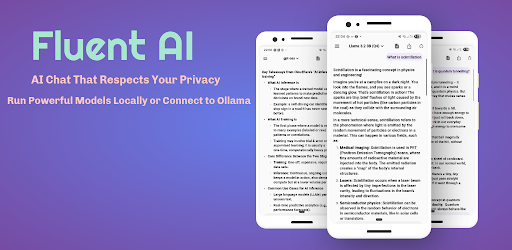
Our Solution: FluentAI is a privacy-first AI companion that connects to Ollama models for online interactions and can run AI locally on-device for complete offline functionality. Users can chat with advanced language models, get instant answers, and maintain full privacy.
Key Features:
- Dual-mode operation: Online (Ollama) and offline (on-device AI)
- Complete privacy - your conversations stay on your device
- Flexible AI model selection based on your needs
- Beautiful, intuitive chat interface
- Fast response times with intelligent caching
Tech Stack: Kotlin, Jetpack Compose, Ollama API, TensorFlow Lite (for on-device AI), Room Database
💡 Key Learning:
Privacy is a feature, not an afterthought. By offering both online and offline AI, we give users the freedom to choose how they want to use the app based on their privacy preferences and internet availability.
Download FluentAI on Google Play Store →
2. QuizHeights - AI-Powered Trivia
The Problem: Traditional quiz apps use fixed question banks that quickly become repetitive. Users want fresh, personalized trivia on topics they care about.
Our Solution: QuizHeights uses GPT-4 to generate unique trivia questions on any topic imaginable. Want a quiz about 80s sci-fi movies? Done. Quantum physics for beginners? No problem. The AI creates contextually appropriate questions with varying difficulty levels.
Tech Stack: Kotlin, Jetpack Compose, Cloudflare Workers (for AI API), Room Database (for offline caching)
💡 Key Learning:
Caching AI-generated content is crucial. We cache quiz questions locally, reducing API costs by 70% while ensuring the app works offline.
3. LuckySphere - AI Astrology & Numerology
The Vision: Combine ancient wisdom with modern AI to create personalized astrological insights that feel meaningful and actionable.
How It Works: Users input their birth details, and our AI generates personalized daily horoscopes, lucky numbers, and auspicious times. The AI doesn't just spit out generic predictions—it considers the user's context, past readings, and preferences.
Monetization: Ad-supported with premium subscription option for users who want an ad-free experience with additional features.
4. Wisdomflow - Daily AI-Curated Wisdom
A meditation and mindfulness app that uses AI to curate daily wisdom quotes, affirmations, and reflections tailored to the user's mood and goals.
Unique Feature: The AI learns from user interactions—if you favorite stoic philosophy quotes, it serves more Marcus Aurelius. If you're into modern self-help, it adapts accordingly.
5. VedicNameGenerator - AI-Powered Baby Names
Finding the perfect name that matches Vedic astrology, numerology, and family preferences is complex. Our AI considers birth charts, lucky numbers, family traditions, and modern naming trends to suggest meaningful names.
User Feedback: "This app saved us weeks of searching. It understood our requirements perfectly!" - User Review
6. Other Apps in Our Portfolio
- AI-powered productivity assistant for everyday tasks and scheduling
- Intelligent mortgage calculation and optimization tools
- Astrological timing guidance for important decisions
- SOA and BPM reference guide for developers and architects
Our Development Process: From Idea to Play Store
Phase 1: Validation (1-2 weeks)
Before writing a single line of code, we validate the concept:
- Market research: Is there demand for this?
- Competition analysis: What's already out there?
- AI feasibility: Can current AI models handle this?
- Monetization potential: How will we sustain it?
Phase 2: MVP Development (3-4 weeks)
We build a Minimum Viable Product focusing on core AI functionality:
- Backend setup, AI integration, API design
- Android app foundation, UI/UX design
- Feature implementation, caching, offline support
- Testing, bug fixes, optimization
Phase 3: Beta Testing (2 weeks)
We launch closed beta via Play Store's internal testing. Feedback at this stage is gold—users tell us what AI features work, what feels gimmicky, and what needs improvement.
Phase 4: Launch & Iteration (Ongoing)
After Play Store launch, we monitor crash reports (Crashlytics), user reviews, and analytics (GA4, AdMob). We iterate weekly based on data, not assumptions.
Technical Architecture: How We Build Scalable AI Apps
Frontend: Native Android (Kotlin + Jetpack Compose)
We choose native Android over cross-platform frameworks for several reasons:
- AI features need smooth, responsive UIs
- Native support for latest design guidelines
- Modern, declarative UI framework
- Access to all Google Play Services
Backend: Cloudflare Workers + Edge Functions
For AI API calls and business logic:
- No server management, scales automatically
- Low latency worldwide
- Pay only for what you use
- Protect against abuse
AI Integration: OpenAI GPT-4 + Groq
We use a hybrid approach:
- Complex reasoning, content generation
- Fast inference for real-time responses
- Store common responses to reduce API costs
- Graceful degradation if API is down
Data Storage: Room DB + Supabase
- Offline-first local storage
- Cloud PostgreSQL for sync and backups
- Periodic background sync when online
Lessons Learned: What Worked and What Didn't
✅ What Worked
- Users love that apps work without internet
- Reduced API costs by 70%, improved speed
- Better performance than cross-platform alternatives
- Launch fast, iterate based on real usage
- In-app surveys provide actionable insights
❌ What Didn't Work
- Spent too much time on features users didn't want
- Led to rejected updates and delays
- Burned through credits in early beta testing
- Users prefer personalized, context-aware content
Building a Sustainable App Business
Our approach to building and growing our app portfolio:
- 9 apps across different categories and use cases
- Building apps people want to use regularly
- Weekly updates based on user feedback
- Focus on user satisfaction and retention
Monetization Strategy
We use a hybrid approach:
- Banner and interstitial ads
- Ad-free experience with extra features
- Ads that don't interrupt user flow
- Continuously test ad formats and placement
The Future: What's Next for AI Apps?
Based on our experience and industry trends, here's where we see AI apps heading:
1. On-Device AI
With devices like Pixel 8 and Galaxy S24 featuring dedicated AI processors, we're exploring on-device inference. Imagine AI features that work instantly, privately, without any internet connection.
2. Multimodal AI
Text is just the beginning. We're experimenting with image, voice, and video-based AI features. Imagine a quiz that generates questions from photos you take, or an astrology app that analyzes your voice for mood.
3. AI-Powered Personalization
The next generation of our apps will deeply personalize every interaction. Not just based on preferences, but on context, time of day, mood, and past behavior.
Want to Build Your Own AI App?
Based on our journey building nine successful AI apps, here's our advice:
- Focus on one AI feature that solves a real problem
- Users expect mobile apps to feel fast and responsive
- Don't hit the AI API for every request
- Internet isn't always available
- Let user behavior guide your roadmap
- AI is powerful but not magic
Conclusion
Building AI-powered Android apps has been an incredible journey. We've learned that the best AI features are invisible—they enhance the experience without getting in the way. They're personalized without being creepy. They're smart without being complicated.
As Generative AI continues to evolve, we're excited to push the boundaries of what's possible on mobile. Whether it's generating trivia, predicting lucky times, or helping people find the perfect name, AI should make technology more human, not less.
At Readheights Technologies, we're committed to building AI apps that matter—apps that people use regularly, recommend to friends, and genuinely find valuable. If you're interested in building your own AI-powered app, we'd love to hear from you.
Ready to Build Your AI App?
We've helped clients bring their AI app ideas to life across diverse categories. From concept validation to Play Store launch, we handle everything. Let's build something great together.