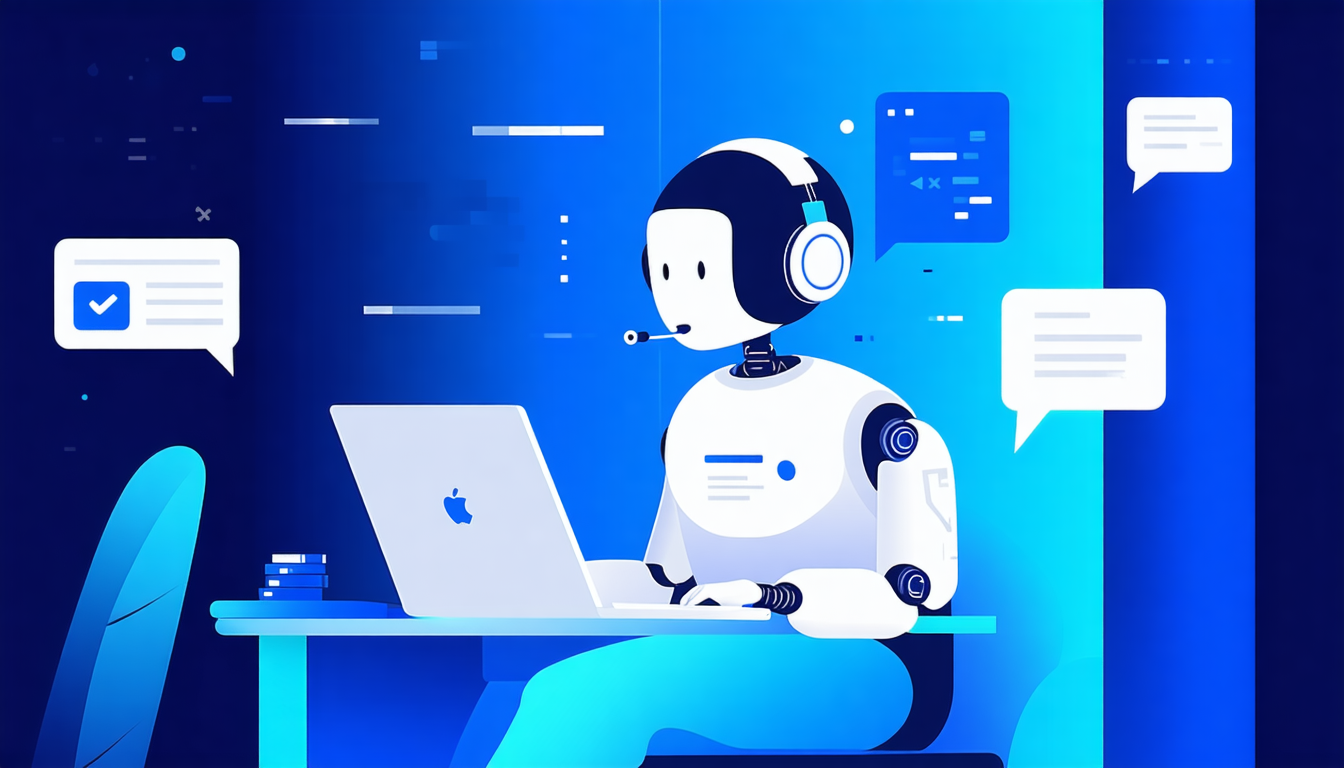
Generative AI is no longer a futuristic concept—it's a practical tool that businesses of all sizes are using to automate workflows, create content, and deliver better customer experiences. Here's everything you need to know about integrating AI into your business.
What is Generative AI?
Generative AI refers to AI systems that can create new content—text, images, code, music, and more—based on patterns learned from training data. Unlike traditional software that follows explicit rules, Generative AI can understand context, be creative, and produce human-like outputs.
The most well-known examples include:
- ChatGPT (OpenAI): Conversational AI for text generation
- Claude (Anthropic): Advanced reasoning and long-context understanding
- Gemini (Google): Multimodal AI for text, images, and more
- DALL-E/Midjourney: Image generation from text descriptions
- GitHub Copilot: AI-assisted coding
Why Businesses Are Adopting Generative AI
According to recent surveys, 70% of companies are either using or planning to use Generative AI within the next year. Here's why:
Key Benefits
- Handle repetitive tasks without hiring more staff
- AI doesn't sleep or take breaks
- Same quality output every time
- 50-70% cost savings vs human labor for routine tasks
- Prototype and iterate rapidly
- Tailor experiences to individual users
Real-World Use Cases: How Readheights Uses AI
At Readheights Technologies, we've integrated Generative AI across our operations and client projects. Here are some practical applications:
1. Customer Support Automation
Challenge: Handling app support queries across multiple applications.
Solution: We built an AI-powered support chatbot that handles common questions automatically. It understands context, refers to documentation, and escalates complex issues to humans.
Result: Significant reduction in support costs, 24/7 availability, high customer satisfaction with AI responses.
2. Content Generation for Apps
Use Case: Our QuizHeights app generates unlimited trivia questions on any topic.
How it works: Users request a quiz (e.g., "80s movies"), and our AI generates 10 contextually appropriate questions with multiple-choice answers and explanations.
Impact: Infinite content library without manual creation. Users love the variety and personalization.
3. Personalized Recommendations
Example: LuckySphere app provides personalized astrological insights.
Instead of generic horoscopes, our AI considers the user's birth chart, past readings, current planetary positions, and personal context to generate meaningful daily guidance.
4. Code Generation & Debugging
Internal use: Our development team uses AI copilots to write boilerplate code, debug issues, and optimize performance.
Productivity gain: Measurably faster development cycles, fewer bugs, better code quality.
Step-by-Step: How to Integrate AI into Your Business
Step 1: Identify High-Value Use Cases
Not all tasks benefit from AI. Focus on:
- Data entry, email responses, report generation
- Marketing copy, social media posts, blog drafts
- FAQs, troubleshooting, ticket routing
- Summarizing insights, trend identification
- Research, market analysis, competitive intelligence
⚠️ What NOT to Automate with AI
- Strategic decision-making (AI should inform, not decide)
- Sensitive customer interactions requiring empathy
- Legal or medical advice (requires human expertise)
- Tasks where errors have serious consequences
Step 2: Choose the Right AI Platform
Different AI tools excel at different tasks:
- Best for general-purpose text generation, conversation, creative writing
- Excels at long documents, complex reasoning, nuanced conversations
- Strong multimodal capabilities (text + images), search integration
- Jasper AI (marketing), Synthesia (video), Runway (video editing)
Step 3: Start with a Pilot Project
Don't transform your entire business overnight. Start small:
- (time saved, cost reduced, quality improved)
Step 4: Train Your Team
AI tools are only as good as the people using them. Invest in training:
- How to write effective AI prompts
- Reviewing and refining AI outputs
- When to use AI vs when to do it manually
- Understanding AI biases and weaknesses
Step 5: Integrate with Existing Systems
For maximum value, AI should work seamlessly with your current tools:
- Auto-generate customer emails, summarize interactions
- AI-powered ticket routing and suggested responses
- Automated SEO optimization, content suggestions
- AI-generated insights from your data
Technical Implementation: How We Build AI Solutions
Architecture Overview
A typical AI integration we build for clients looks like this:
- Web app, mobile app, or chatbot
- Node.js/Python backend that handles requests
- OpenAI API, Claude API, or custom models
- Store user context, conversation history, caching
- Track usage, costs, performance, errors
Cost Management
AI API costs can add up quickly. Here's how we keep them under control:
- Store common responses to reduce duplicate API calls
- Shorter prompts = lower costs
- Use cheaper models for simple tasks
- Prevent abuse and runaway costs
- Free tier with paid upgrades
Quality Control
AI isn't perfect. We implement multiple layers of quality control:
- Check responses against business rules
- Flag low-confidence responses for manual check
- Users can rate AI responses
- Compare different AI models and prompts
- Track quality metrics over time
Common Challenges & Solutions
Challenge: AI Hallucinations
Problem: AI sometimes generates confident but incorrect information.
Solution: Use RAG (Retrieval Augmented Generation) to ground responses in your actual documents/data. Implement fact-checking layers.
Challenge: Privacy & Data Security
Problem: Sending sensitive data to third-party AI services.
Solution: Use enterprise AI plans with data protection guarantees. Anonymize data before sending to AI. Consider on-premise solutions for highly sensitive use cases.
Challenge: User Resistance
Problem: Employees worried about AI replacing their jobs.
Solution: Position AI as a tool that handles boring tasks, freeing humans for creative work. Show tangible benefits (less overtime, easier workflows). Include team in the process.
ROI: What to Expect
Based on our experience with client projects and industry benchmarks:
- Significant cost reduction, faster response times
- Major productivity improvements, substantial time savings
- Insights available in minutes instead of weeks
- Faster prototyping and iteration cycles
- More personalized outreach at scale
Typical payback period: Varies by use case, but most see returns within months.
The Future of AI in Business
Generative AI is evolving rapidly. Here's what we see coming:
1. Multimodal AI (Text + Image + Video + Audio)
Future AI will seamlessly work across all content types. Imagine generating a marketing campaign from a single prompt—complete with copy, images, video scripts, and voiceovers.
2. AI Agents (Autonomous Task Completion)
Instead of just answering questions, AI will complete entire workflows. For example: "Research competitors, draft a pricing strategy, and create a presentation"—all done autonomously.
3. Domain-Specific AI
Industry-specific AI models trained on specialized data (legal, medical, engineering) will provide expert-level insights.
Getting Started with Readheights
We've helped dozens of businesses integrate AI into their operations. Our process:
- Understand your business, goals, pain points
- Identify high-value AI opportunities
- Build and test a focused AI solution (4-6 weeks)
- Track ROI and gather feedback
- Expand successful pilots across the organization
Conclusion
Generative AI is not hype—it's a fundamental shift in how software works. Businesses that integrate AI thoughtfully will gain significant competitive advantages: lower costs, faster execution, better customer experiences, and more innovation.
The key is to start small, measure results, and scale what works. Don't wait for perfect solutions—the best time to experiment with AI is now.
Ready to Integrate AI into Your Business?
Let's discuss your specific use case and design an AI strategy that delivers real ROI. We've built AI solutions across industries—from customer support automation to content generation to predictive analytics.